
Project materials can be spread across survey results, field notes, participant feedback, reports, meeting records, and other documents. Tools such as NotebookLM, now called Gemini Notebook, are designed to help users work with collections of their own sources rather than starting from a blank chat. The platform can work with materials such as PDFs, Word documents, presentations, spreadsheets, web pages, and YouTube URLs, allowing users to ask questions and explore information within a defined set of sources.
That makes the tool potentially useful for the kind of information-heavy work common in CSOs. A practitioner could bring together project reports, survey findings, meeting notes, or other relevant documents and use the tool to identify information, compare materials, generate summaries, or explore questions across the sources. Google says NotebookLM has grown to more than 30 million users and over 600,000 organisations, reflecting how the tool has expanded beyond individual study into broader research and work contexts.
But the usefulness of a tool like this does not come from simply uploading as many documents as possible. The practitioner still needs to decide which sources matter, what questions are worth asking, and whether the information produced by the system makes sense in context.
The value is therefore not that AI suddenly knows what a project should do next. It can help reduce some of the work involved in finding and organising information, but the interpretation still belongs to the practitioner who understands the programme, the community, and the context behind the information.
This distinction matters in P/CVE work, where information can be complex and decisions often require context that cannot simply be extracted from a document.
Building Tools Instead of Waiting for Tools
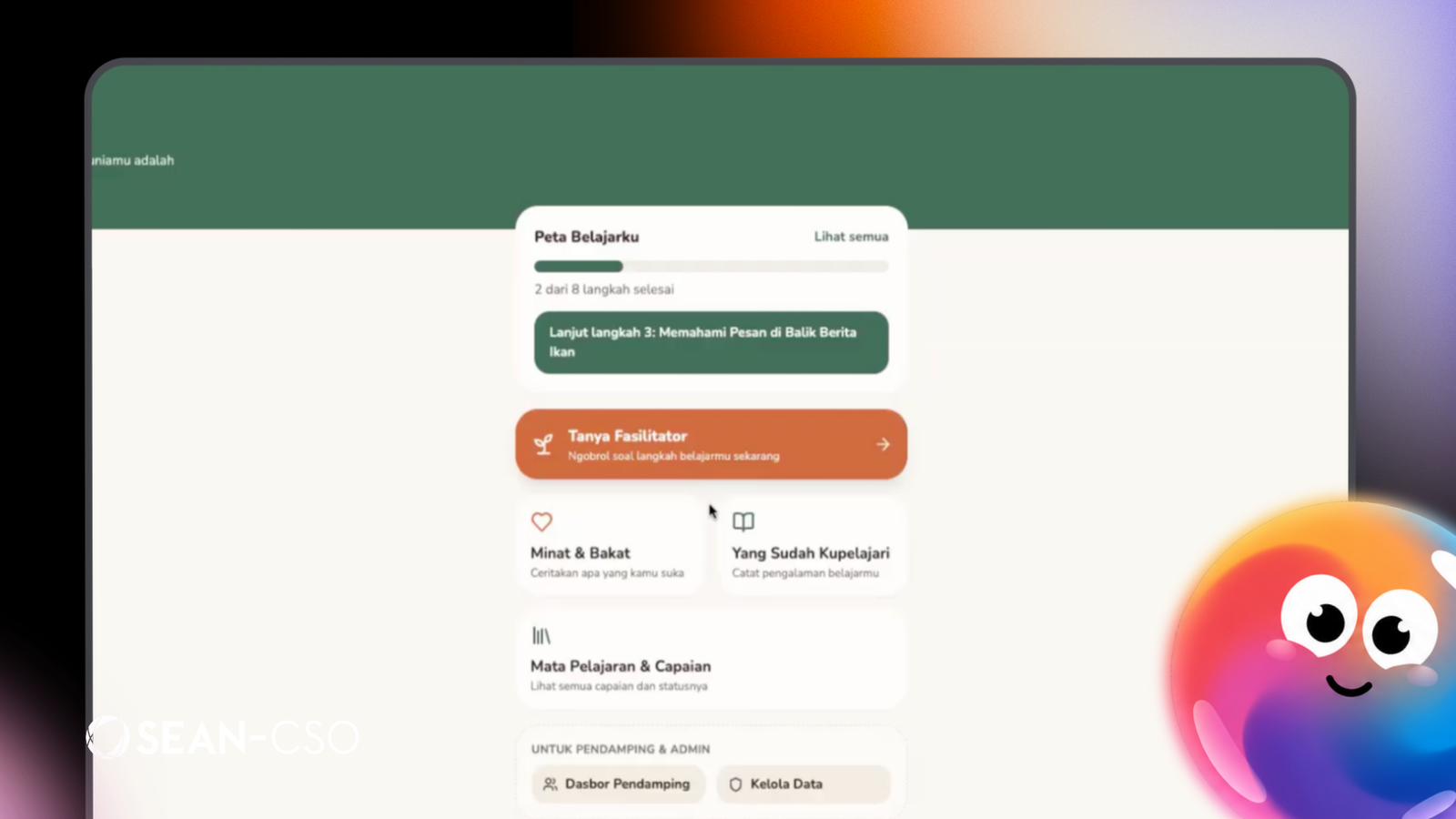
The session then moved from using existing tools to exploring how participants could create their own. This is where the idea of vibe coding became relevant.
Vibe coding broadly refers to using natural-language instructions to work with AI to generate software rather than writing every line of code manually. IBM describes it as a shift towards development driven by intent, where users explain what they want the software to do and AI helps translate those instructions into code.
Platforms such as Base44 take this approach further by turning a natural-language description into a working application. According to Base44, users can describe an idea and have AI generate interfaces, data structures, backend logic, authentication, and other components, which can then be refined through further conversation.
For CSOs that may not have a technical team, this creates another possibility. Instead of waiting for a developer to translate an operational problem into a digital solution, practitioners can begin experimenting with the problem themselves.
During the webinar, several participants shared the tools and prototypes they had developed, each responding to a different practical need. Some focused on organising information, while others explored ways to manage organisational work, monitor content, support case-related processes, or make sense of programme outcomes.
What made these examples useful was not the technology behind them, but the fact that they started with different problems. A tool does not need to look impressive or solve every part of an organisation’s work to be useful. It can begin with one process that is repetitive, difficult to manage, or simply takes more time than a team has available.
This is also where vibe coding can change the starting point for non-technical practitioners. The question is no longer only, “Do we have someone who can code this?” It can also become, “Can we clearly describe the problem, build a simple version, and see whether it helps?”
The examples also showed that there is no single AI solution for P/CVE work. The same approach can be adapted to different organisational contexts depending on what practitioners actually need.
Start Small, Then Test
One of the clearest lessons from the session was that CSOs do not need to transform their entire workflow at once. A better starting point may be one repetitive task, one information-management problem, or one process that consistently takes too much time. From there, practitioners can build a simple minimum viable product, test it with actual users, and learn what needs to change.
This is particularly important when working with AI-generated applications. The ability to produce a working app quickly does not mean that the first version will automatically fit the organisation. Base44 itself describes the process as iterative, where users can generate an initial application and continue refining its layout, features, workflows, and logic through further instructions.
As Irfan put it, “It is not your job to validate whether the app is good or not. It depends on the user.”
That shifts the focus away from whether a tool looks technically impressive and towards whether it actually works for the people who are expected to use it. A tool that works well in a demonstration may still fail when it meets a real workflow, different users, incomplete information, or changing needs.
Testing also matters because P/CVE work involves considerations that cannot be treated as technical details alone. Practitioners need to think carefully about what information can be entered into an AI tool, how sensitive data is handled, and how AI-generated outputs are reviewed before they inform decisions.
What Comes Next?
Ultimately, using AI in P/CVE is not about finding a tool that can do everything, but understanding where a tool can genuinely support the work, building around the needs of the people doing it, and learning from what happens when that tool is put into practice. The examples explored during the webinar suggest that practical AI does not have to begin with a large system or a complicated technical project. It can begin with a pile of documents that needs to be understood, a repetitive process that needs simplifying, or a small operational problem that keeps taking time away from the work that matters.
That is perhaps the more useful way to think about tools such as Gemini Notebook and AI app builders like Base44. They are not substitutes for practitioners, and they do not remove the need for judgement. They can, however, make it easier for people to experiment with ways of working that are closer to their actual needs.
The next question is what happens when these small experiments become part of real practice. Across the SEAN-CSO webinar series, we have explored different ways AI can support P/CVE work, from understanding digital narratives and developing counter-narratives to working with information and building practical tools around practitioners’ needs.
The series will close with a final session featuring Eko Nugroho, CEO of Kummara, exploring why games matter in the age of AI and how games and AI can be harnessed to support P/CVE initiatives. The session will also introduce Kummara’s 3R Framework: Reframe, Rethink, and Refine, and consider how games and AI can work together to create more effective learning experiences.
Join the final SEAN-CSO webinar to explore how games and AI can make P/CVE learning more engaging, practical, and meaningful.
Register now!
https://seancso.org/registerseancso2026

SEAN-CSO provides a platform for civil society organisations in Southeast Asia to network and share resources. Through this network, members can support each other, share knowledge, and coordinate efforts to address the region’s social challenges. In doing so, SEAN-CSO contributes to strengthening the voice of civil society at both regional and international levels.